
Three forwarders can quote “shipping from Yiwu” for the same cargo and still be pricing three different jobs. One may stop at the airport, another may include delivery, and a third may leave destination charges or import clearance outside the total.
Start with one shipment brief. Give every forwarder the same packed cargo data, destination, and service scope, then read the replies against the same cost, time, and responsibility rows.
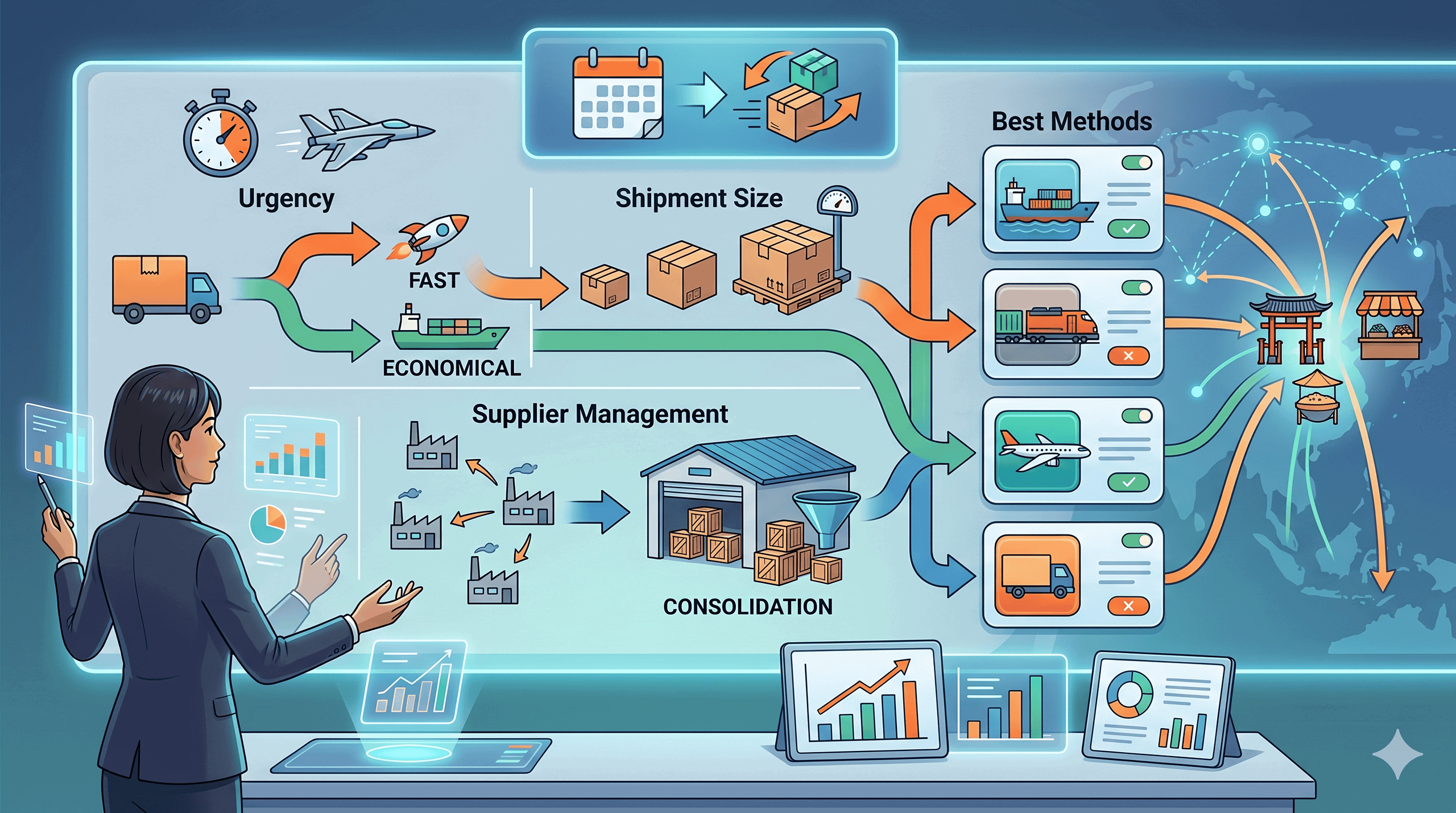
What goes in a Yiwu shipment brief
Do not ask, “How much is shipping to my country?” A forwarder cannot price that accurately without the packed cargo and the exact delivery scope.
Use the same brief for every quotation:
| Brief field | What to record |
|---|---|
| China pickup | Supplier address or Yiwu warehouse address; whether pickup is already included |
| Final destination | Airport, seaport, fulfillment center, or full delivery postcode and address |
| Cargo-ready date | The date all goods and documents will be ready, not the supplier’s estimated production finish |
| Packing | Carton count, dimensions, gross and net weight, pallet details, and whether cartons can be stacked |
| Commodity | Plain product description, materials, intended use, declared value, currency, and proposed HS classification for specialist review |
| Restrictions | Batteries, magnets, liquids, powders, aerosols, branded goods, wood packing, food-contact items, or other controlled features |
| Service scope | Port, airport, or door delivery; export clearance; import clearance; duties/taxes; insurance; appointment delivery |
| Deadline | The required delivery date and the commercial consequence of missing it |
| Destination roles | Consignee, importer of record where applicable, customs broker, and receiving contact |
Use final packing data. A sample carton or supplier estimate can change after retail packaging, protective material, mixed-SKU packing, or repacking in Yiwu. If the quote is based on estimated cartons, label it provisional and require a revised total after the warehouse measures the finished shipment.

What happens between supplier delivery and freight booking
A Yiwu order can reach the shipping stage as several separate supplier deliveries rather than one export-ready load. Somebody has to receive the cartons, match them to the right order, spot visible packing damage, record missing or extra cartons, and remeasure before freight is booked. Consolidation may remove duplicate pickups or minimum charges, but storage, repacking, late suppliers, and incompatible cargo still affect the total.
For the detailed warehouse sequence, use How to Consolidate Goods from Yiwu and the Yiwu Cargo Consolidation Guide for Multi-Supplier Buyers. The route decision starts after that sequence produces final cargo data.
Which shipping methods are worth pricing
There is no route-neutral rule that says one fixed number of kilograms must go by express, another band by air, and anything over one fixed CBM must go by sea. Packaging density, destination, service scope, carrier minimums, current capacity, and destination charges can move the crossover.
Use the shipment brief to build a short list:
| Method | Request it when | What must be clear in the quote |
|---|---|---|
| Express courier | The cartons are ready, the deadline can justify the premium, and integrated tracking or door delivery matters | Exact service tier, chargeable weight, dimensional factor, item restrictions, customs billing, remote-area and oversize charges |
| Air freight | The deadline is tighter than an ocean plan and you can define the airport or door handoff | Airport pair, chargeable weight, terminal/security/fuel charges, clearance, last mile, and where the estimated transit clock starts and stops |
| Rail | A current service exists for the destination and its terminal handoffs fit the receiving plan | Departure/arrival terminals, border handoffs, frequency, customs scope, last mile, and schedule assumptions |
| Ocean LCL | The cargo does not justify an exclusive container and can tolerate consolidation/deconsolidation handling | W/M or other chargeable basis, origin and destination CFS charges, minimums, free time, customs, and delivery scope |
| Ocean FCL | An exclusive container, fewer cargo handoffs, or the actual route quote makes sense for the load | Container type, CY handoff, trucking, loading responsibility, free time, detention/demurrage exposure, and destination delivery |
Maersk describes LCL as shared container space and says the shipper pays for the space used, measured in cubic metres.[3] It also states that whether LCL or FCL costs less depends on the actual cargo.[4] Treat those as operating principles, not as a universal CBM breakpoint.
If the shipment is specifically going to the United States, use the separate Shipping Cost from China to US comparison for that corridor. Do not apply a US table to Europe, the Middle East, Africa, or another destination.
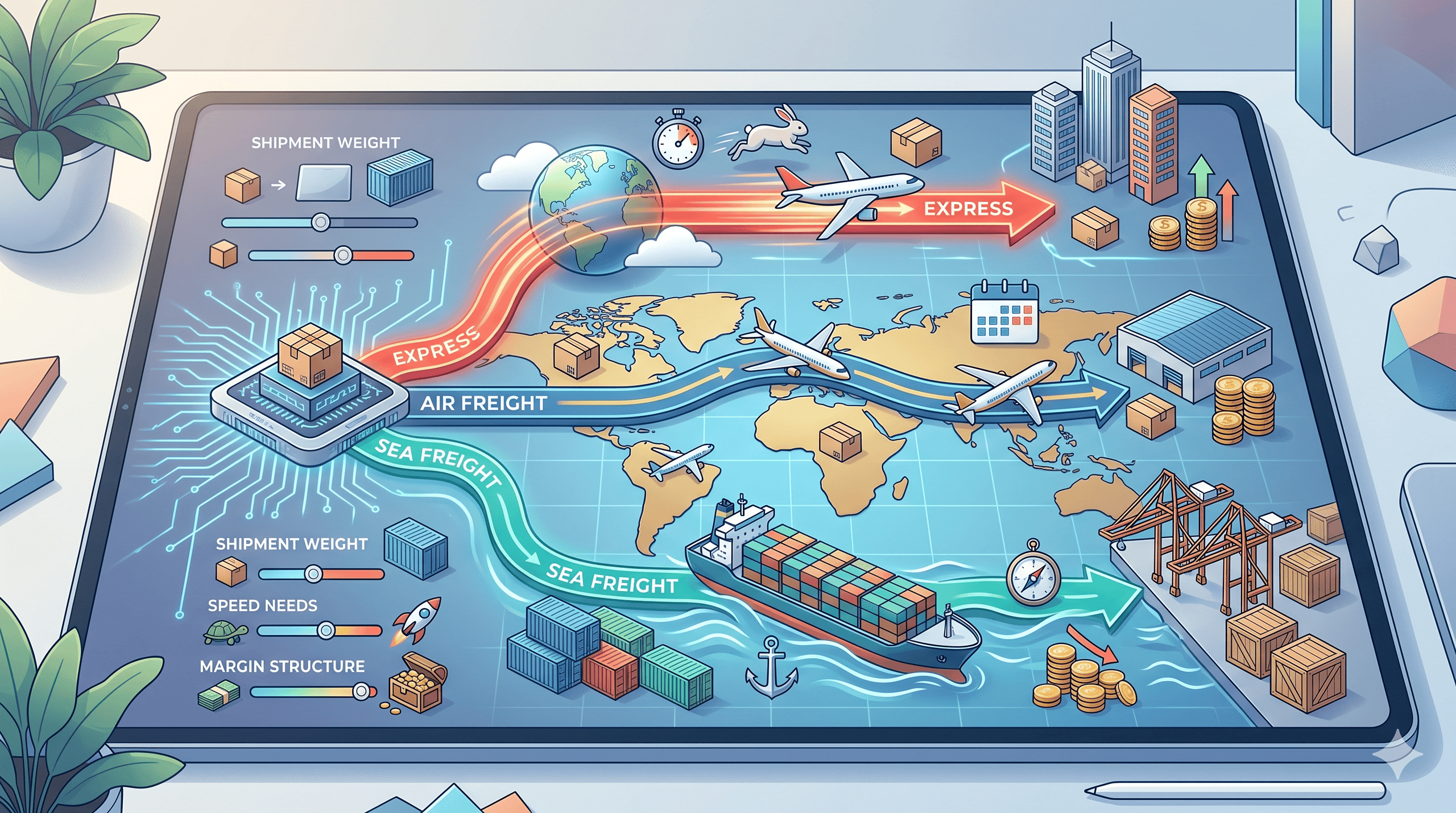
Check the chargeable basis, not just the scale weight
For air cargo, IATA explains that carriers can use actual weight or volumetric weight and price on whichever is higher.[1] Put the exact divisor, rounding rule, and remeasurement policy on the quote rather than relying on a supplier’s estimated scale weight.
Record these fields:
| Chargeable-weight field | Forwarder’s written answer |
|---|---|
| Actual gross weight | Final warehouse measurement and unit |
| Carton dimensions | Final length, width, and height for every carton type |
| Volumetric formula | Exact divisor or density rule used for this service |
| Chargeable weight | The figure on which the quoted rate is calculated |
| Rounding | Per piece, per shipment, or another stated rule |
| Re-measurement | Who measures again, when the price may change, and what evidence is supplied |
Packaging can change the answer. Ask the Yiwu warehouse to photograph the closed cartons with a scale and measuring tape in view before the final quote is approved. That record will not prevent every carrier adjustment, but it gives both sides the same starting data.

Separate the freight method, service scope, and Incoterm
These are three different decisions:
- Freight method describes how the main movement happens: courier, air, rail, LCL, or FCL.
- Service scope describes the handoffs included in the forwarder’s work: warehouse-to-airport, port-to-port, door-to-door, or another written route.
- Incoterm allocates specified delivery tasks, costs, and risks between seller and buyer under the sales contract.
DDP is not a freight method. A DDP shipment might use air, rail, or ocean transport. ICC explains that the seller is responsible for import clearance under DDP, and warns that a foreign seller may be unable—or may find it difficult and costly—to complete those formalities in some destination countries.[2]
Before accepting a DDP label, ask for the precise named place, the Incoterms version, the entity responsible for import clearance, the treatment of duties and taxes, and what happens if customs rejects that arrangement. Do not treat “door to door” and “DDP” as interchangeable.
What the final invoice can contain
Before choosing a quote, line it up against this stack:
| Cost layer | Questions to ask |
|---|---|
| Yiwu pickup | Which suppliers or warehouse are covered? Are waiting time and repeat pickup excluded? |
| Warehouse work | Receiving, storage, carton check, repacking, labels, pallets, photos, and final measurement—what is included? |
| Export handoff | Export declaration, documentation, origin handling, terminal or CFS charges—who pays? |
| Main carriage | Rate basis, carrier/service, fuel or peak surcharges, routing, and quote validity |
| Cargo protection | Packing responsibility, carrier liability limits, and any separately agreed cargo insurance |
| Destination | Terminal/CFS, brokerage, inspection, storage, duties/taxes, and local handling |
| Final delivery | Postcode, appointment, liftgate, residential or remote-area charges, redelivery, and receiving limits |
| Exceptions | Customs exam, storage after free time, address correction, oversize handling, return, disposal, or re-routing |
FIATA’s definition of freight-forwarding services spans transport, consolidation, storage, handling, packing, distribution, customs-related work, insurance, and documents.[6] FIATA also describes forwarders as comparing routes and modes to balance cost, speed, and reliability.[6] A forwarder may offer some or all of those services, so the quote still needs to name the work included in this job.
What a transit estimate actually covers
“Five days” has little value if nobody states when day one begins or where the clock stops. Separate the plan into milestones:
- all suppliers deliver to the agreed Yiwu warehouse;
- shortages, packing issues, and final measurements are resolved;
- the final quote is confirmed against the measured cargo;
- booking is accepted and the cargo meets the cutoff;
- export and origin-terminal processing are completed;
- main carriage takes place;
- destination clearance and any inspection are completed;
- final delivery is booked and received.
Ask the forwarder to label the quoted time as estimated carrier transit, airport/port to airport/port, or estimated door-to-door elapsed time. Record the assumed departure date, cutoff, route, destination handoff, and validity date.
One comparison sheet for every quote
Put every quote into the same sheet so the comparison is honest:
| Comparison row | Quote A | Quote B | Quote C |
|---|---|---|---|
| Quote reference and validity | |||
| Final carton count, CBM, actual and chargeable weight | |||
| Method, carrier/service, route, and schedule basis | |||
| Pickup point and included Yiwu handling | |||
| Export clearance and origin charges | |||
| Main freight and stated surcharges | |||
| Destination terminal/CFS and brokerage | |||
| Duties/taxes: included, excluded, or separately estimated | |||
| Final delivery point and receiving conditions | |||
| Insurance or declared-value protection | |||
| Free time and exception-charge schedule | |||
| Estimated time: start point, end point, and assumptions | |||
| Importer, broker, consignee, and document owner | |||
| Total comparable amount and currency |
If a row is blank, the forwarder has not priced it. Ask for included, excluded, not applicable, or a separate line before accepting the quote.
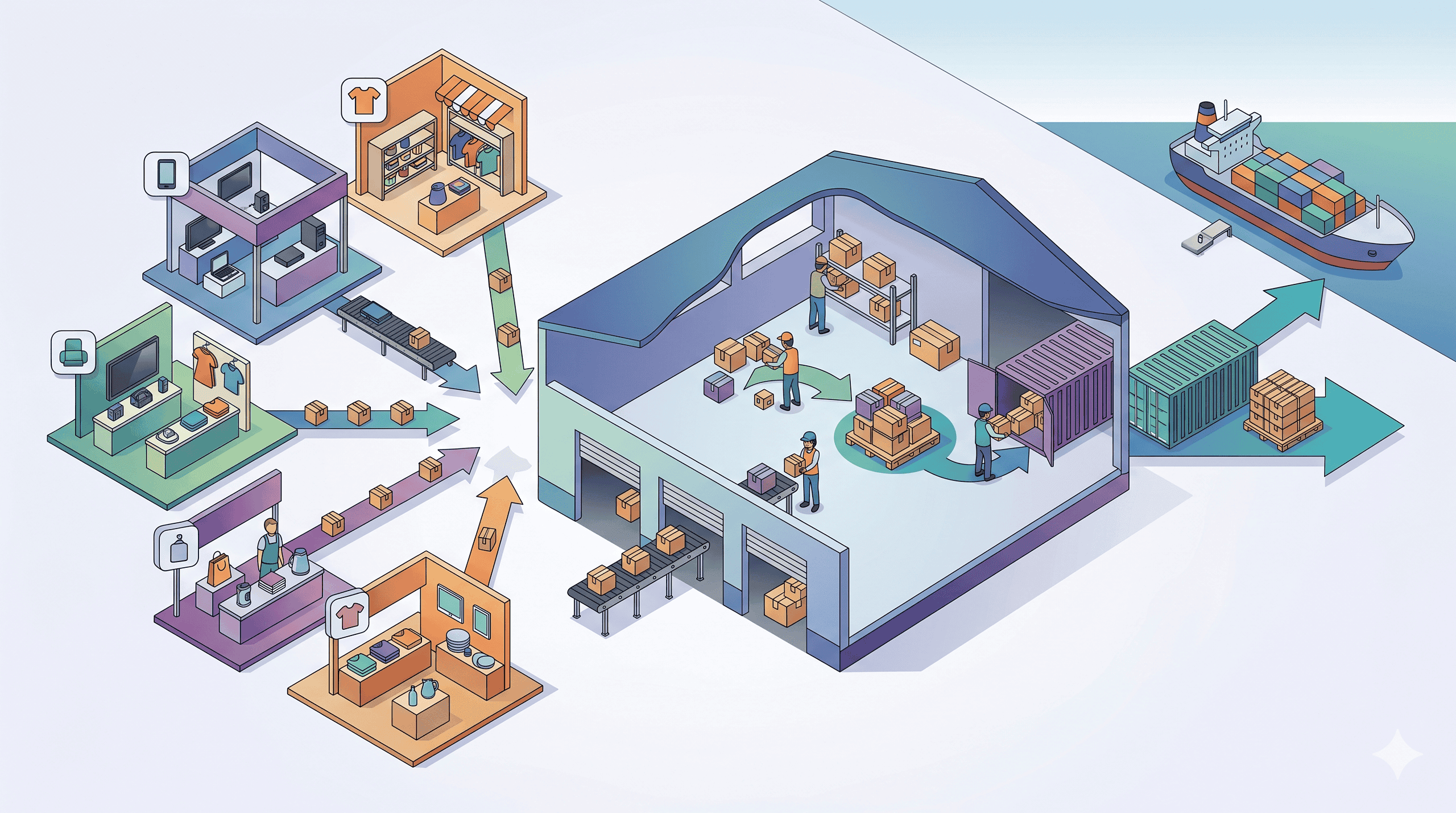
The booking-release check
Release the booking only when the commercial and physical records agree:
- the final packing list matches the measured cartons;
- the commercial invoice and packing list use consistent quantities and descriptions;
- restricted or special cargo has been disclosed and accepted for the selected service;
- the chargeable basis and revised total are confirmed after final measurement;
- pickup, delivery point, route, service scope, and named Incoterm place are written down;
- inclusions, exclusions, free time, and exception charges are attached to the quote;
- the consignee, importer, broker, and receiving contact have accepted their roles;
- insurance or the decision not to buy separate cover is recorded;
- the transit estimate states its start, end, and assumptions;
- the booking confirmation identifies the owner of each next handoff.
The U.S. International Trade Administration notes that a commercial invoice is used by customs in determining duties and that a packing list does not replace the commercial invoice.[5] Destination rules vary, so ask the destination broker or relevant authority what else the product and country require.
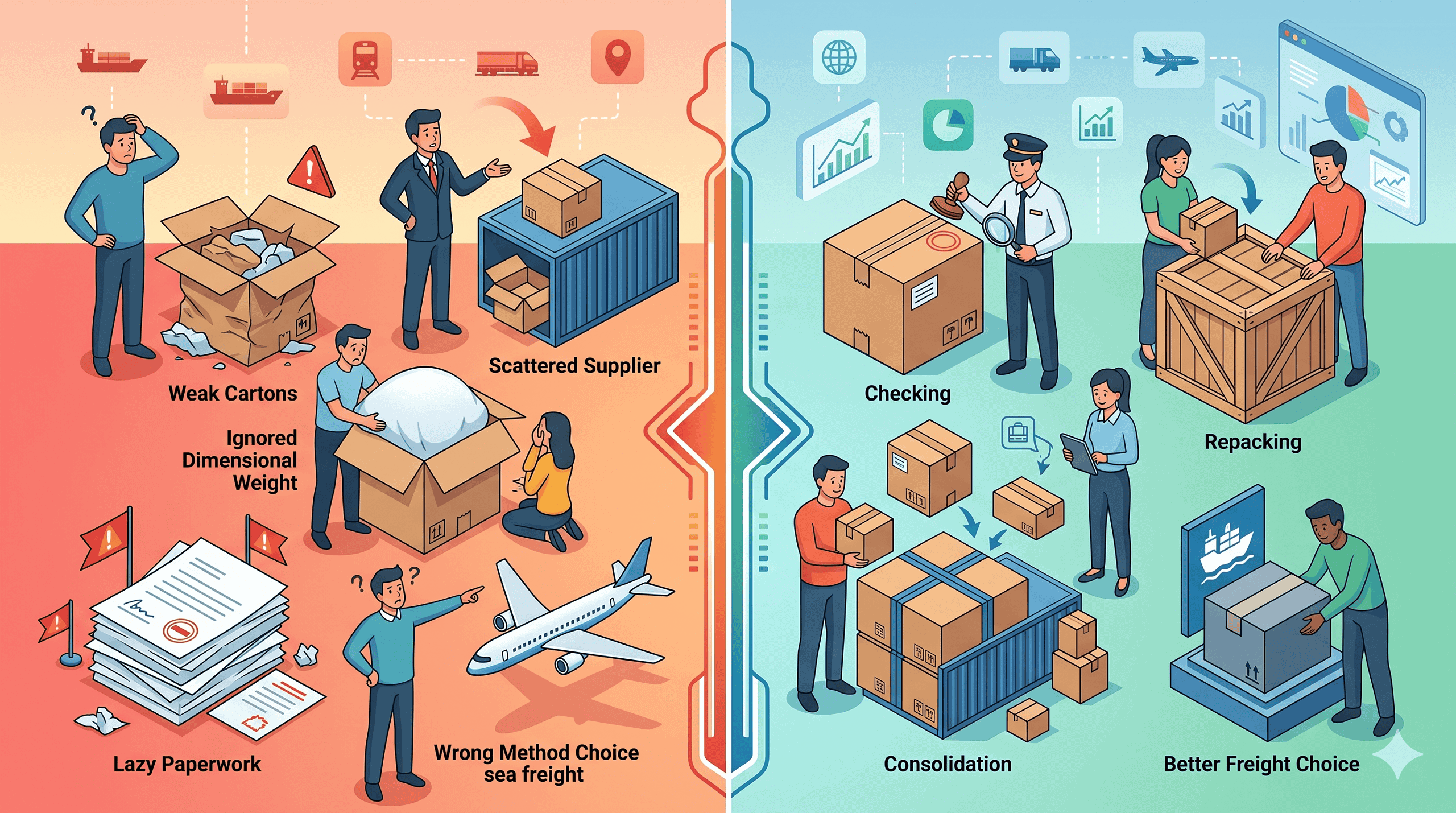
Where a local Yiwu partner fits
A local partner can collect supplier delivery notices, receive goods into an agreed warehouse process, flag visible carton problems, coordinate the agreed checks, compile final packing data, and request comparable freight quotes. That does not automatically make the partner the carrier, destination customs broker, or importer of record.
Write the handoffs down. If you need product checks before the cartons are released, use the Yiwu Sample Checking and Quality Control Guide. If the order also needs supplier coordination, see our China Sourcing Service. For e-commerce inventory that needs a receiving and dispatch workflow after import, review Shopify Fulfillment from China.
When you contact Style Sourcing, send the supplier list, destination, required delivery date, and the latest packing data. We can identify the missing inputs and help turn the final cargo record into comparable freight requests; the quote itself still depends on the packed shipment and route.
Related Yiwu guides
- Yiwu Market Guide 2026
- How to Source from Yiwu Market
- How to Consolidate Goods from Yiwu
- How to Pay Yiwu Suppliers Safely
- How to Avoid Scams in Yiwu Market
Sources
[1] IATA — Air Cargo Tariffs and Rules: What You Need to Know
[2] ICC Academy — Incoterms® 2020: EXW or DDP?
[3] Maersk — What Is LCL in Ocean Shipping?
[4] Maersk — Is It Cheaper to Ship LCL or FCL?
[5] U.S. International Trade Administration — Common Export Documents


