

Most buyers who fail in Yiwu do not fail because the market is bad.
They fail because they walk in with no filtering system, ask shallow questions, and mistake busy booths for reliable suppliers.
That is the real difference between “visiting Yiwu” and actually sourcing from Yiwu.
Sourcing from Yiwu is not like online shopping with better prices. It is a B2B buying process built on category judgment, supplier comparison, sample discipline, and follow-up control.
If you skip one of those steps, the cheap-looking order often becomes an expensive lesson later.
Below is a practical workflow for sourcing from Yiwu Market, from filtering booths to locking bulk orders, so you can buy with more confidence and fewer avoidable mistakes.
Step 1: Arrive with a Clear Sourcing Target
The weakest way to source in Yiwu is to arrive hoping the market will tell you what to buy.
That sounds flexible. In practice, it usually turns into noise.
Before you step into a booth, you should already know:
- your specific product lane
- your target price ceiling
- your MOQ comfort zone
- your packaging or branding needs
The more precise you are, the more useful every supplier conversation becomes.
Step 2: Filter Booths Rapidly
You are not in Yiwu to talk to everybody. You are there to find the few suppliers worth serious attention.
That means filtering fast.
Look for specialization first.
If one booth focuses tightly on your category and another booth sells a random mix of unrelated products, the specialist usually deserves your time first. Not always, but usually.
Yiwu rewards buyers who can say, “This looks broad but weak,” and move on quickly.
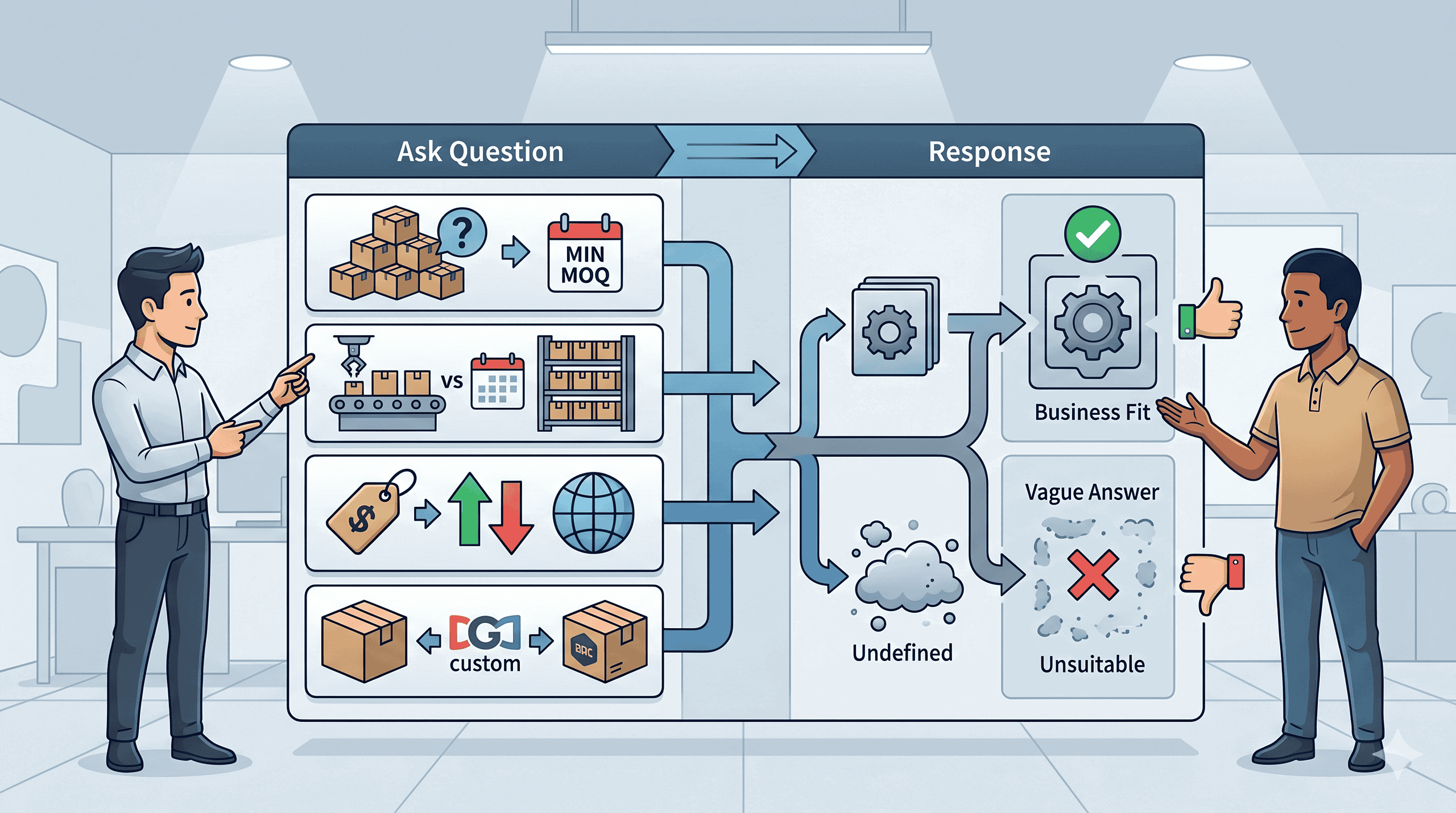
Step 3: Ask the Right Sourcing Questions
Bad sourcing starts with shallow questions.
If all you ask is price, you will get a price, but you still will not know whether the supplier is right for you.
Use supplier conversations to test how they think:
- “What is the MOQ for this exact version?”
- “Is this stock or made to order?”
- “What changes the price?”
- “Can you handle logo, packaging, or barcode requirements?”
Good suppliers usually answer clearly and specifically. Weak suppliers often stay vague until later, and that is exactly the problem.
Step 4: Take Photos and Organize Your Notes
After a few hours in Yiwu, product memory starts blending together.
That is why disciplined note-taking matters more than many first-time buyers expect.
A practical system is simple:
- photo of the booth card
- photo of the exact sample discussed
- short note with MOQ, price range, lead time, and packaging details
Buyers who do this well make better evening decisions. Buyers who do not usually go back to the wrong supplier or lose leverage in follow-up.
Step 5: Demand Samples Before Bulk Orders
In Yiwu, a good-looking sample is not enough. But it is still your baseline.
If you are buying stock, get a real sample. If you are customizing, approve a real pre-production sample.
The sample matters because it gives you something concrete to measure bulk production against.
Without that, disputes become vague. With it, the conversation becomes simple: “This does not match what we approved.”

Step 6: Handle Payment Safely
One of the easiest ways to lose control in sourcing is to pay too early.
The standard structure for most made-to-order work is still:
- 30% deposit to start production
- 70% balance after QC and before shipment
Do not give away your leverage before the goods are checked.
If payment is one of your main concerns, go next to How to Pay Yiwu Suppliers Safely.
Step 7: Perform Quality Control (QC)
Most sourcing failures do not start at the booth. They show up later, when the bulk order quietly slips away from the sample standard.
That is why QC is not a nice extra. It is part of the sourcing workflow.
At minimum, check:
- quantity
- material match
- finish quality
- logo and packaging details
- carton strength
If you want a full breakdown, our Yiwu Quality Control Guide goes deeper.

Step 8: Consolidate and Ship
Yiwu becomes much more commercially useful when you stop thinking order by order and start thinking shipment by shipment.
If you buy from multiple booths, do not let each one ship independently unless you have a very specific reason. That is usually the slower, messier, and more expensive route.
Consolidation gives you cleaner shipping, fewer documents, and better control over packing quality.
That is why smart Yiwu sourcing does not end at “I found the product.” It ends at “the shipment is organized properly.”
How Style Sourcing Can Help
Sourcing from Yiwu works best when the whole chain is controlled, not just the first supplier conversation. That is the workflow we help buyers build.
- We help filter suppliers before weak fits turn into expensive follow-up.
- We help keep sample review, QC, payment timing, and consolidation connected as one process.
- We help buyers move from market comparison to cleaner export execution with less guesswork.

If you want a tighter Yiwu sourcing workflow, these are the right next pages:
- Yiwu Market Guide 2026
- How to Consolidate Goods from Yiwu
- Yiwu Buying Agent Service
- China Sourcing Service
- Contact Us
FAQ: How to Source from Yiwu Market
Can foreigners source directly from Yiwu Market?
Yes, foreign buyers can visit and negotiate in Yiwu, but the real work usually starts after the booth conversation: sample follow-up, payment timing, QC, consolidation, and export shipping.
What is the safest Yiwu sourcing workflow?
The safer workflow is supplier shortlist first, sample review second, negotiated order terms third, QC before final payment, and consolidation before international shipping.
When should I use a Yiwu buying agent?
Use a local agent when you are buying from multiple suppliers, cannot follow up in Chinese, need sample checks, or want one team to manage QC and shipping. See our Yiwu Buying Agent Service for the full workflow.


