

When buyers talk about being “scammed” in Yiwu, they usually imagine something dramatic.
In real life, the losses are often much quieter: thinner fabric, weaker plating, vague MOQ promises, bad cartons, and quality that slips just enough to kill margin.
That is what makes the topic worth taking seriously.
Most Yiwu problems are not movie-style fraud. They are weak controls, loose follow-up, and suppliers taking advantage of buyers who do not verify enough.
This guide is here to help you avoid those very real, very common failures.
Most Yiwu “Scams” Start with Weak Control, Not Evil Theater
The dangerous part of Yiwu is not usually someone running away with your money.
It is the small downgrade that seems manageable at first but becomes expensive across a full order: lighter material, bad packaging, changed hardware, or sample quality that quietly does not match bulk production.
That is why the best protection in Yiwu is structure, not paranoia.
The Most Common “Scam” in Yiwu: Quality Fade

Outright theft is rare. The most dangerous trap in Yiwu is Quality Fade.
Here is how it happens: You approve a beautiful, heavy, high-quality sample in the booth. You pay the deposit. When the bulk order arrives, the product looks similar, but the material is 10% thinner, the stitching is weaker, and the packaging is cheap.
The supplier saved a few cents per unit to increase their margin, hoping you would not notice or would be too far away to return the goods.
How to avoid it:
- Always take a sealed, signed physical sample with you.
- Demand a Pre-Shipment Inspection (PSI) before you pay the 70% balance.
- Make it clear from day one: “If the bulk does not match the sample, I will not pay the balance.”
The “Bait and Switch” on MOQ and Pricing

Some booths will tell you whatever you want to hear to get you to sit down.
You ask, “Can you do an MOQ of 500 for $1.00?” They say, “Yes, no problem.” You spend an hour discussing details. Then, when it is time to write the proforma invoice, they say, “Ah, for 500 pieces, the price is $1.50. To get $1.00, you must buy 5,000.”
How to avoid it:
Confirm the MOQ and price link three times in the first five minutes. If they are vague, walk away. Good suppliers are direct about their pricing tiers.
The “Fake Factory” Illusion

Many trading companies in Yiwu pretend to be direct factories.
Being a trading company is not a bad thing—they offer better variety and lower MOQs. The problem is when a trading company lies about being a factory, promises deep customization they cannot control, and then blames “production delays” when things go wrong.
How to avoid it:
- Look at their booth. If they sell 50 entirely different types of products (e.g., bags, toys, and electronics), they are a trader. A real factory specializes.
- Ask detailed technical questions about material weight or molding costs. Real factories know the answers instantly; traders have to “call the boss.”
The Bad Packaging Trap

This destroys more profit than bad products.
A supplier quotes you a great price. What they do not tell you is that they plan to pack your delicate goods in thin, single-ply cardboard boxes used for domestic Chinese transport.
When the container arrives in the US or Europe, the bottom cartons are crushed, and 20% of your inventory is damaged.
How to avoid it:
Always specify “5-ply export standard corrugated cartons” in your purchase order. Have your QC team check the carton thickness before shipping.
How to Pay Yiwu Suppliers Safely
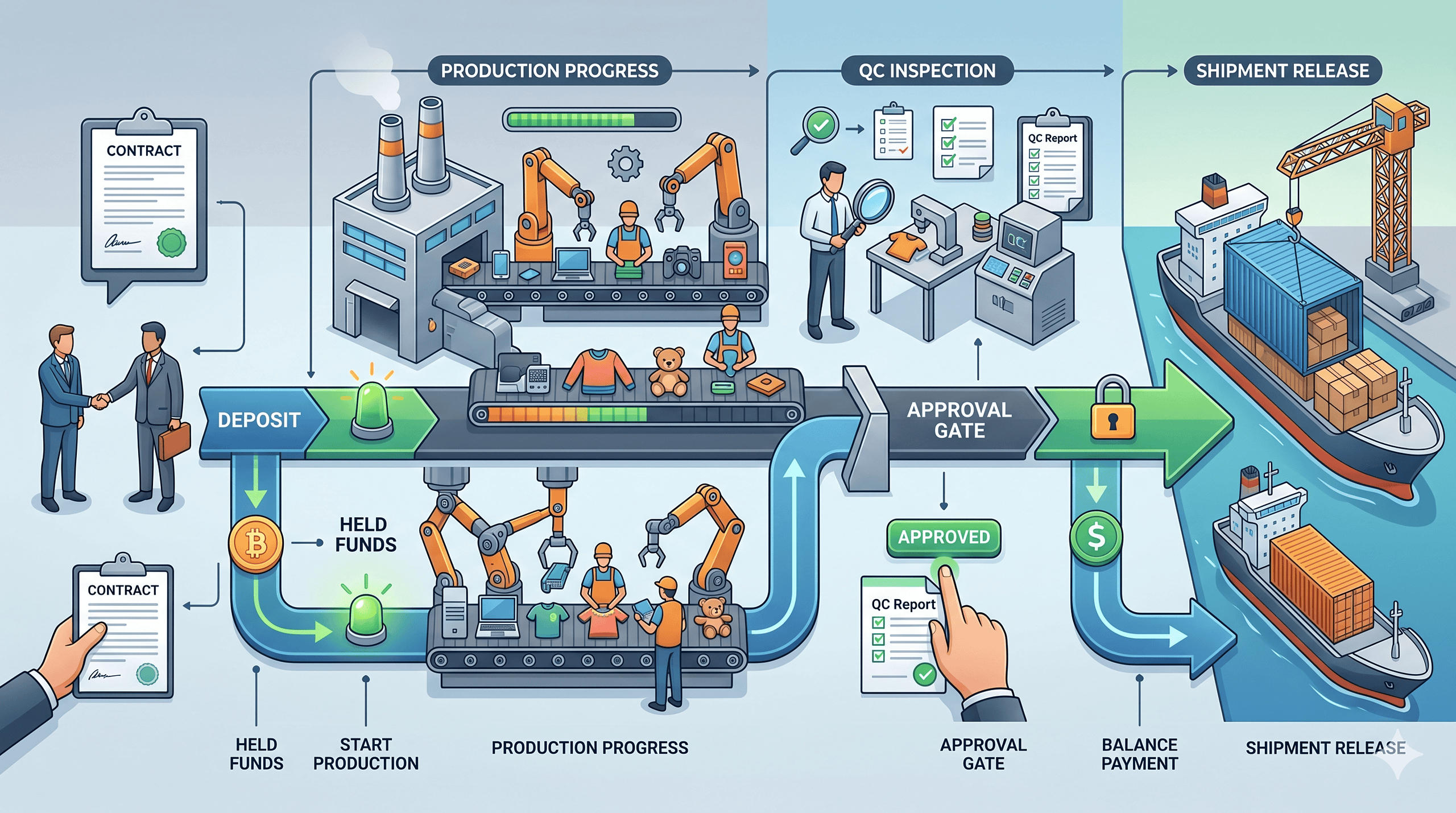
Never wire your entire payment upfront to a new supplier.
The standard safe term is 30% T/T deposit to start production, and 70% balance after QC inspection and before shipment.
If a supplier demands 100% upfront for a standard made-to-order product, it is a massive red flag. Walk away.
For more on this, read our guide on How to Pay Yiwu Suppliers Safely.
Why You Need a Local Sourcing Agent

If you are not physically in China to check the goods before they load onto a ship, you are exposed to all of these risks.
A reputable Yiwu sourcing agent acts as your firewall.
They:
- Verify the supplier’s background.
- Hold the approved physical sample.
- Perform the quality control inspection.
- Refuse bad goods before the final payment is made.
How Style Sourcing Protects Buyers
The safest Yiwu orders usually look boring on paper: clear sample, clear payment terms, clear QC, and clear packing. That is the kind of structure we help buyers build.
- We filter out weak suppliers before they get too far into the order.
- We check samples and bulk goods against what was actually approved, not what was loosely discussed.
- We help control packing and shipment quality so the order does not fall apart at the last stage.


